← Back to Casestudies
Jun 24, 2026 · Supplements
How a Dutch Supplements Brand Shifted From ROAS to New Customer Acquisition and Grew New Customers by 46%

When a subscription model changes what a customer is worth, steering on ROAS becomes the wrong goal. Together with the client, the strategy shifted toward new customer acquisition and made the account stronger than it had been during peak season.
+46% Growth in new customers (Feb to May)
~€300 Expected lifetime value per new customer
+10.5% More new customers in May than the January peak
The Brand
A Dutch supplements brand that sells across multiple European countries through its Shopify store. The Google Ads account has been under my management for over three years, with close coordination between the client and me. The brand has a loyal customer base with a high share of returning buyers, and since late 2025 it runs a subscription model that lets customers sign up for automatic repeat deliveries.
It is a logical step for supplements: if you take a product daily, you do not want to reorder every month.
The Starting Point
For years, the account was steered primarily on ROAS, as is common in ecommerce. The break even point and profitable ROAS were clear, but the arrival of the subscription model fundamentally changed the economics of the brand. A new customer is no longer worth a single order, but represents a potential subscriber. New customers stay subscribed for an average of 7 months with an average order value of €45. That means an expected customer value of over €300 per acquired customer.
With that LTV, a new customer is allowed to cost more. In consultation with the client, we concluded that continuing to steer on ROAS would make the account too cautious and leave growth on the table.
The Approach
From 1 January 2026, we shifted the strategy from ROAS steering to New Customer Acquisition, with CPA and the number of genuinely new customers as the leading KPIs.
1. KPI shift from ROAS to CPA on new customers
A higher cost per order became acceptable because the subscription LTV more than earns it back. The key question was no longer “what does this click return today?”, but “what is this customer worth in 7 months?”
2. Identifying the winning products
An important learning was that not every product lends itself to new customer acquisition. A select number of items structurally bring in more new customers at lower CPCs. Analysing which items attract new customers at product level, rather than only looking at total performance, showed where the budget could create the greatest acquisition effect.
3. Dedicated campaigns per winning product, against the consolidation trend
Current best practice prescribes consolidating as much as possible. For this account, we deliberately chose the other route and gave the strongest acquisition products their own dedicated campaigns. Search intent differs per item and each product has its own seasonal moments. This segmentation makes it possible to scale each product at the right time, rather than letting strong products disappear inside a consolidated structure.
The Results
First an important nuance for anyone who wants to understand the numbers: January is always a peak month for supplements brands. New year’s resolutions push search volume and the number of new customers up artificially. This is a seasonal effect that returns every year and says little about the underlying strength of a strategy. February, once that effect has worn off, is therefore the honest starting point to measure the impact of the new approach.
Month | New customers | Growth vs previous month |
|---|---|---|
January | 1,129 | Seasonal peak (new year’s resolutions) |
February | 856 | Starting point |
March | 929 | +8.5% |
April | 1,056 | +13.7% |
May | 1,247 | +18.1% |
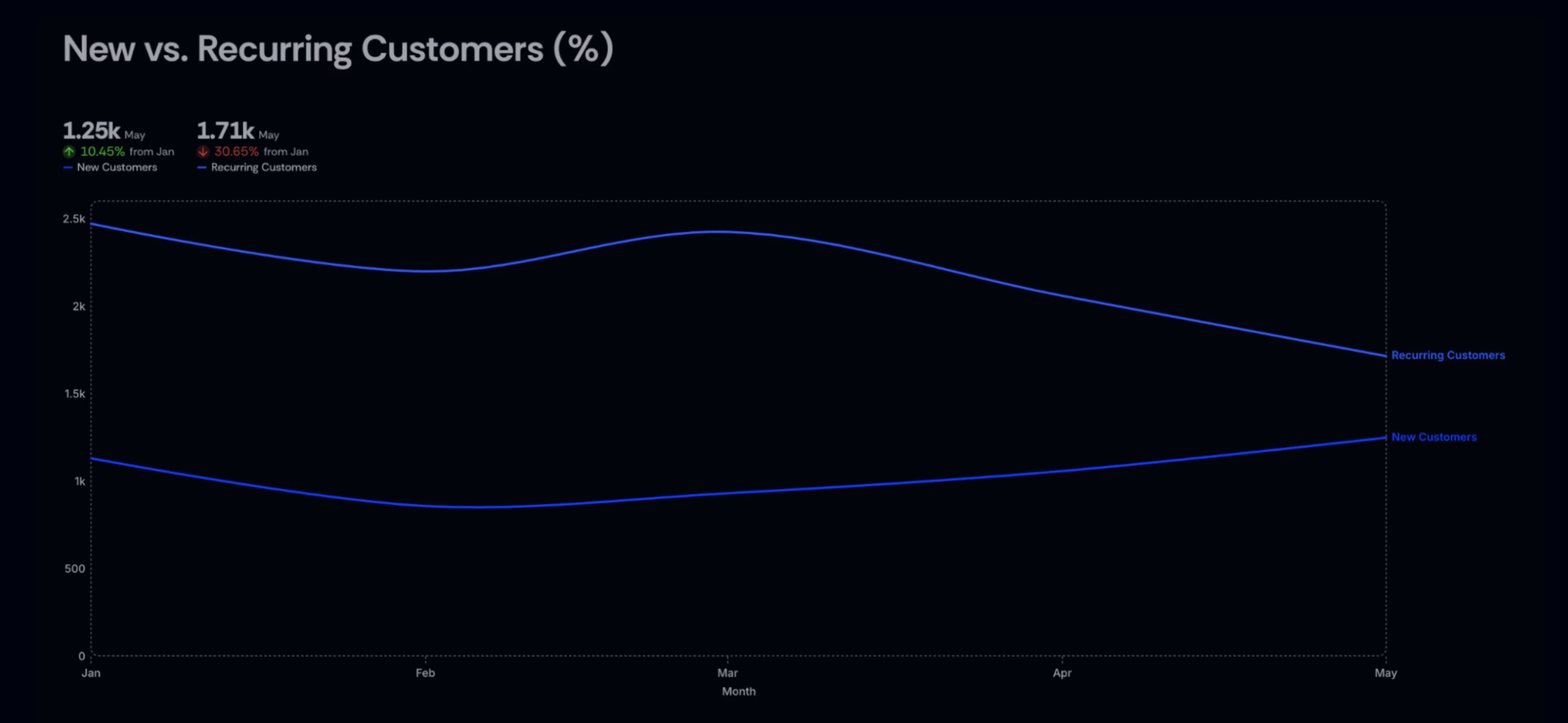
Three things stand out in these numbers:
1. Structural growth of 46% in three months
From the realistic starting point in February, the number of new customers grew every month, to 1,247 in May. An increase of +46%.
2. The growth accelerates
Not only does volume rise month over month, the growth rate itself increases too: from +8.5% in March to +13.7% in April and +18.1% in May. That is exactly the pattern this approach should produce. As the dedicated campaigns collect data, we can make sharper decisions per product and Google Ads becomes more effective every month.
3. May beats the January peak
Perhaps the strongest signal is that May brought in 10.5% more new customers than the January peak, despite having no seasonal advantage. The structural acquisition power of the account now sits above the level that was previously only reached in high season.
Each new customer represents not one order, but an expected subscription value of over €300. The growth in volume therefore translates directly into future, recurring revenue.
Key Takeaways
A subscription model changes what a customer is worth, and therefore what you are allowed to pay to acquire one.
Keep steering on ROAS in that situation and you optimise for the wrong goal.
Not every product is an acquisition product. Analyse at product level which items actually bring in new customers.
Sometimes the best practice is not the best choice. Segmenting at product level provided the control that consolidation would have taken away.